For HSK learners, mastering Mandarin goes beyond memorizing characters and grammar rules. It's about immersing yourself in Chinese culture, and nothing defines that culture more than food (饮食文化).
In HSK listening exams (Levels 3-6), dialogues often take place in restaurants or discuss regional travel. Understanding the difference between "Sichuan Spice" and "Cantonese Freshness" provides the context needed to score high. Let's embark on a gastronomic journey that will satisfy your appetite and boost your vocabulary.
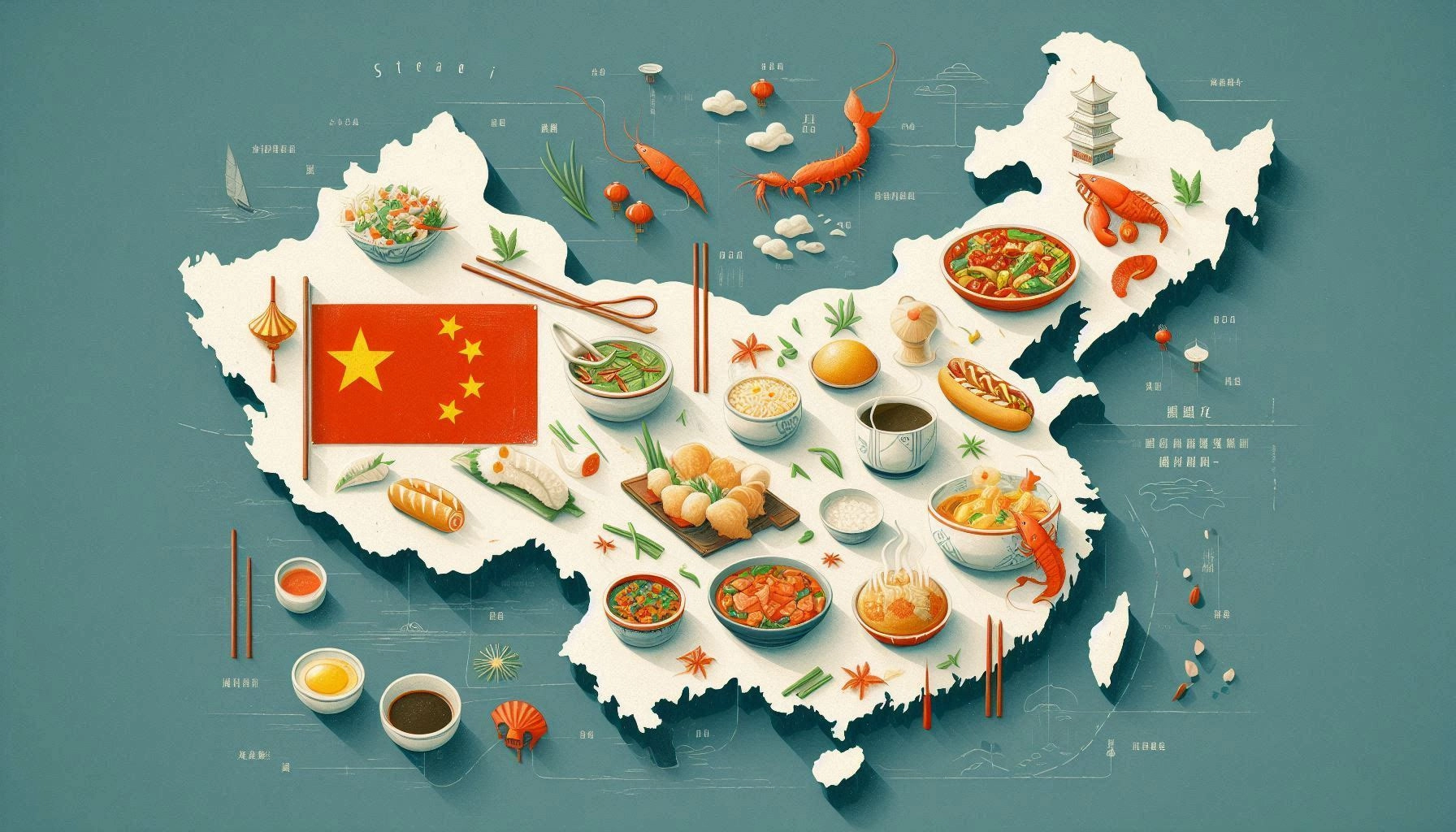
The Eight Great Traditions: A Linguistic Feast
China's cuisine is officially categorized into "The Eight Great Traditions" (八大菜系 - bā dà cài xì). Each region offers unique adjectives essential for exam descriptions.
1. Sichuan Cuisine (川菜, chuān cài) - The Southwest
Famous for bold flavors.
- Key Vocabulary:
- 麻辣 (má là) - Numbing and spicy (HSK 5 Context).
- 火锅 (huǒ guō) - Hot pot (HSK 4).
- Study Resource: Sichuan is the home of Hot Pot. To master the menu, check our guide on Chinese Hotpot Vocabulary.
2. Cantonese Cuisine (粤菜, yuè cài) - The South
Famous for preserving the natural taste of ingredients.
- Key Vocabulary:
- 清蒸 (qīng zhēng) - Steamed (Light).
- 点心 (diǎn xin) - Dim sum / Light refreshments.
- Grammar Focus: Using "measure words" for small steamer baskets (e.g., 一笼包子).
3. Jiangsu Cuisine (苏菜, sū cài) - The East
Known for soft textures and sweet/sour flavors.
- Key Vocabulary:
- 红烧 (hóng shāo) - Braised in soy sauce (lit: Red Cook).
- 清淡 (qīng dàn) - Light / Not greasy (HSK 5 - Crucial word for describing diet preferences).
4. Shandong Cuisine (鲁菜, lǔ cài) - The North
Salty and fresh, heavy on seafood and soups.
- Key Vocabulary:
- 海鲜 (hǎi xiān) - Seafood (HSK 4).
- 咸 (xián) - Salty (HSK 4).
5. Zhejiang Cuisine (浙菜, zhè cài)
Similar to Jiangsu, but focusing on fresh river food.
- Key Vocabulary: 鲜美 (xiān měi) - Fresh and delicious (describing broth).
6. Fujian Cuisine (闽菜, mǐn cài)
Known for "Mountain and Sea" ingredients and soups.
- Key Vocabulary: 汤 (tāng) - Soup (HSK 2).
7. Hunan Cuisine (湘菜, xiāng cài)
Even spicier than Sichuan, but without the numbing peppercorns.
- Key Vocabulary: 辣 (là) - Spicy (HSK 3).
- 烟熏 (yān xūn) - Smoked (HSK 6 Context).
8. Anhui Cuisine (徽菜, huī cài)
Focuses on wild herbs and hearty stews.
- Key Vocabulary: 野生 (yě shēng) - Wild / Uncultivated.
Want to try these? Check out our list of the Top 10 Authentic Chinese Dishes for Learners.
Culinary Vocabulary: Essential Ingredients for HSK Success
In the HSK Reading Section, recipes or health articles often appear. You need these nouns:
- 食材 (shí cái) - Ingredients (HSK 5)
- 调料 (tiáo liào) - Seasonings (HSK 5)
- 菜单 (cài dān) - Menu (HSK 3)
- 口味 (kǒu wèi) - Taste preference (HSK 4)
- Usage: "What flavor do you prefer?" (你喜欢什么口味?)
- 营养 (yíng yǎng) - Nutrition (HSK 5)
- 特色 (tè sè) - Special characteristic / Specialty (HSK 4)
Grammar Through Gastronomy
Discussing cooking methods is the perfect way to practice Advanced Chinese Sentence Structures.
1. Comparatives (Bi Sentence)
- Sentence: 四川菜比广东菜辣。 (Sìchuān cài bǐ Guǎngdōng cài là.)
- Translation: Sichuan cuisine is spicier than Cantonese cuisine.
2. Resultative Complements
- Sentence: 我吃饱了。 (Wǒ chī bǎo le.)
- Translation: I have eaten [until] full.
- Learn More: Chinese Complement Structures.
3. The 把 (Bǎ) Sentence Structure Used in recipes to move objects (e.g., Put salt in pot).
- Sentence: 请把盐递给我。 (Qǐng bǎ yán dì gěi wǒ.)
- Translation: Please pass me the salt.
- Learn More: Mastering the Ba Construction for HSK 3.
4. The 被 (Bèi) Passive Voice
- Sentence: 这道菜被大家吃光了。 (Zhè dào cài bèi dàjiā chī guāng le.)
- Translation: This dish was eaten clean by everyone.
- Learn More: Using Bei for Passive Voice.
Cultural Bites: Enhancing Your Reading Comprehension
1. Tea Culture (茶文化) You cannot talk about food without tea. It connects to vocabulary like 泡茶 (pào chá - brew tea) and social etiquette.
- Deep Dive: Chinese Tea Culture Vocabulary.
2. Dining Etiquette HSK reading passages often discuss "Table Manners." Knowing when to toast or how to use chopsticks is key cultural knowledge.
- Deep Dive: Chinese Dining Etiquette & Vocabulary.
3. Festival Foods Dumplings for Spring Festival; Mooncakes for Mid-Autumn. Food is symbolic.
- Deep Dive: Chinese Festivals and Customs.
Practical Tips for HSK Learners
- Read Menus: If you can read a Chinese menu, you can likely pass HSK 4 Reading. They contain dense descriptors. Start with Mastering Chinese Food Vocabulary.
- Watch Food Documentaries: "A Bite of China" (舌尖上的中国) is the gold standard for listening practice involving food vocabulary.
- Review the Weird Stuff: Sometimes food names are metaphors (e.g., "Ants Climbing a Tree"). Read about 5 Bizarre Chinese Dish Names to understand the logic.
Conclusion
Exploring China's foodie map is not just a culinary adventure; it's a comprehensive approach to mastering Mandarin. By analyzing the "Ma La" of Sichuan or the "Qing Dan" of Jiangsu, you naturally absorb HSK vocabulary.
So grab your chopsticks and your flashcards—慢慢吃 (Mànmàn chī - Bon Appétit)!