For HSK learners, airports are the ultimate real-world test. It is one thing to pass a reading exam; it is another to understand a fast-paced loudspeaker announcement that your gate has changed. Whether you are preparing for an HSK exam or booking a flight to Beijing, knowing specific airport terminology is vital.
In this guide, we break down air travel into stages, providing you with the exact vocabulary and sentence structures needed to navigate Chinese aviation hubs like Beijing Capital (PEK) or Shanghai Pudong (PVG). This is not just a vocabulary list; it is a survival guide for your linguistic journey.
Part 1: Vocabulary by Proficiency Level
To help you study effectively, we have categorized these terms by HSK level. Even if you are a beginner, we recommend glancing at the HSK 3-4 section, as these words are standard on airport signage.
HSK 1-2 Level Vocabulary (The Essentials)
These are the survival words found on signs and basic tickets. Mastering these helps build a solid foundation.
- 飞机 (fēijī) - Airplane
- 机场 (jīchǎng) - Airport
- 票 (piào) - Ticket
- 出租车 (chūzūchē) - Taxi (Essential for leaving the airport!)
- 小时 (xiǎoshí) - Hour (Critical for discussing flight duration)
- Resource: Time and Date Chinese Vocabulary
HSK 3-4 Level Vocabulary (Navigating Procedures)
At this level, you can handle the logistics of checking in and reading signs.
- 航班 (hángbān) - Flight number/Flight
- 护照 (hùzhào) - Passport
- 登机牌 (dēngjīpái) - Boarding pass
- 行李 (xíngli) - Luggage/Baggage
- 安全 (ānquán) - Safe / Security
HSK 5-6 Level Vocabulary (Specifics & Issues)
Advanced vocabulary is often needed when things go wrong (delays) or when you need specific services.
- 托运 (tuōyùn) - To check (luggage)
- 中转 (zhōngzhuǎn) - Transfer / Transit
- 颠簸 (diānbǒ) - Turbulence
- 取消 (qǔxiāo) - To cancel
- 起飞 / 降落 (qǐfēi / jiàngluò) - Take off / Land
Part 2: Step-by-Step Airport Survival Guide
Rather than just memorizing lists, let's look at how to use these words in the specific order of your journey.
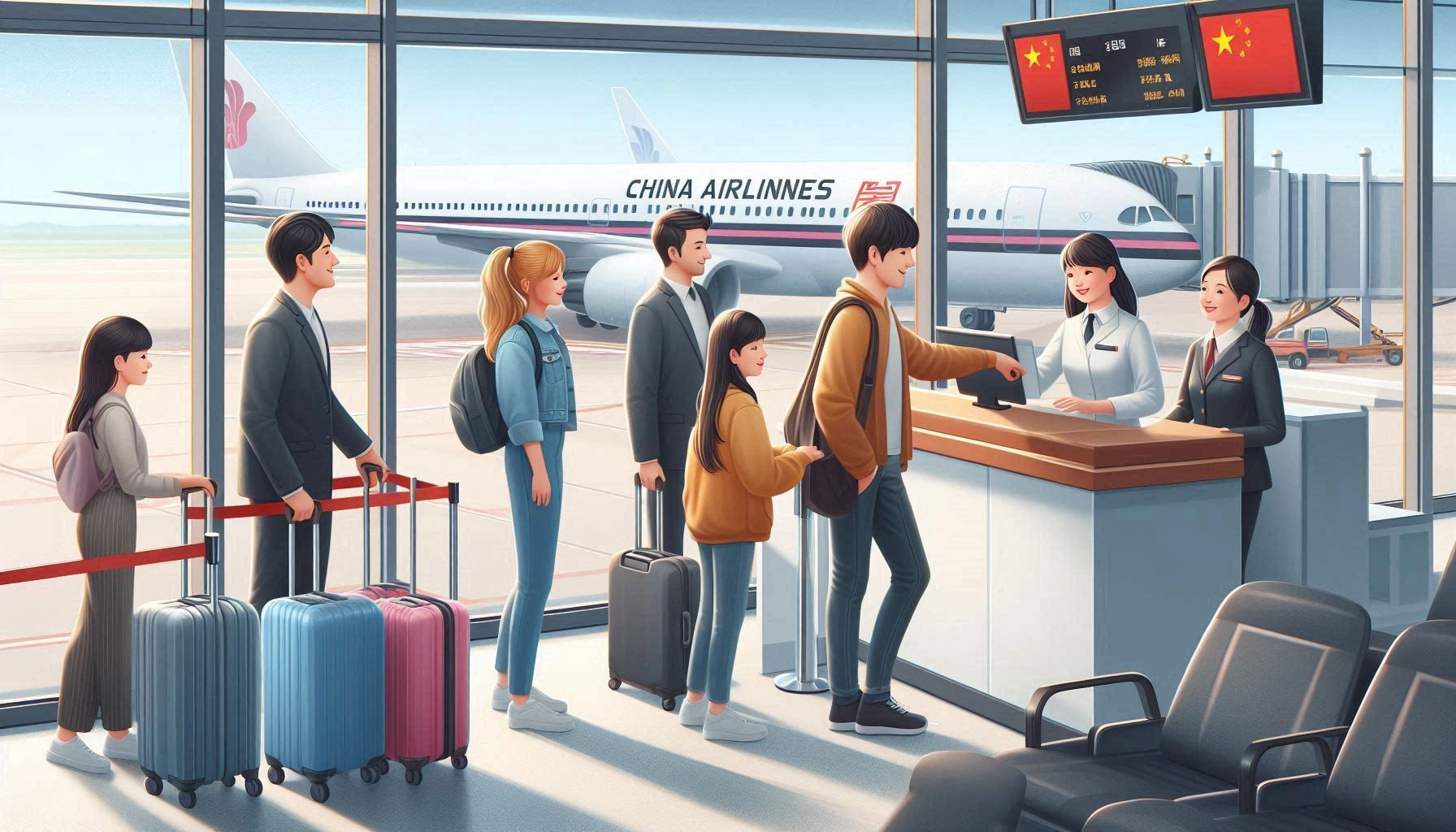
Step 1: At the Check-In Counter (值机柜台 - Zhíjī Guìtái)
When you arrive, the most important interaction isn't just saying "Hello," it's expressing your seat preference.
- Window Seat: 靠窗座位 (Kàochuāng zuòwèi)
- Aisle Seat: 过道座位 (Guòdào zuòwèi)
Useful Sentence Structures:
-
请问,还有靠窗的座位吗? (Qǐngwèn, hái yǒu kàochuāng de zuòwèi ma?) Excuse me, are there still window seats available?
-
我想托运这个行李。 (Wǒ xiǎng tuōyùn zhège xíngli.) I want to check in this luggage.
Step 2: Going Through Security (安检 - Ānjiǎn)
Chinese airport security is stricter than in many other countries, particularly regarding lithium batteries. The most important word you must know is Power Bank (充电宝 - Chōngdiànbǎo). You generally must take it out of your bag for inspection.
- Officer: 请把充电宝拿出来。 (Qǐng bǎ chōngdiànbǎo ná chūlái.) - Please take out your power bank.
- Officer: 有电脑吗? (Yǒu diànnǎo ma?) - Do you have a computer?
Step 3: Finding Your Way
If you get lost, you need to use specific directional language. Don't rely on English signs in smaller regional airports.
- Phrase: 请问,15号登机口在哪里? (Qǐngwèn, shí-wǔ hào dēngjīkǒu zài nǎli?) Excuse me, where is Gate 15?
- Review: Need help with numbers? Review our Essential Chinese Numbers Guide.
Step 4: The Dreaded Delay (延误 - Yánwù)
Summer storms in China often cause delays. If you hear announcements regarding the weather, pay attention.
- Common Announcement: 我们抱歉地通知,您的航班延误了。
(Wǒmen bàoqiàn de tōngzhī, nín de hángbān yánwù le.)
We regret to inform you that your flight is delayed.
- Related Vocabulary: Chinese Weather Vocabulary
Part 3: Essential Grammar for Travelers
When traveling, time and direction are crucial. You must be accurate with your grammar patterns.
1. Sequencing with ...之前 (zhīqián - Before...)
You will see this on signs and hear it in instructions.
- Example: 起飞之前,请系好安全带。 (Qǐfēi zhīqián, qǐng xì hǎo ānquándài.) Before takeoff, please fasten your seatbelt.
2. Directions: 从...到... (From... To...)
This is essential for confirming your itinerary.
- Example: 从上海到北京需要两个小时。
(Cóng Shànghǎi dào Běijīng xūyào liǎng ge xiǎoshí.)
From Shanghai to Beijing takes two hours.
- Deep Dive: Mastering Directions in Chinese
Part 4: Cultural Travel Tips for Students
Understanding the context is as important as the vocabulary.
- Electronic IDs (WeChat): Physical boarding passes are appearing less frequently. Most travelers use a QR Code (二维码 - èrwéimǎ) inside a WeChat Mini Program (微信小程序).
- High-Speed Rail: For trips under 4 hours (like Beijing to Shanghai), the train is often faster and more punctual than flying. It is worth comparing flight vocabulary with train travel vocabulary.
- Battery Rules: As mentioned, lithium batteries (power banks) usually cannot be in checked luggage in China; they must be in your carry-on. Knowing this prevents you from being called back to the counter!
Practice Exercises
Ready to test your comprehension skills? Try reading this typical flight status update:
CA888 航班通知: 您的航班登机口已变更为 T3 航站楼 C20 口。最后一次登机通知。祝您旅途愉快!
Translation Quiz: Did the flight cancel or change gates? (Answer: Change gates to C20).
For more reading materials to practice with, explore our HSK Readings section.
Conclusion
By mastering these terms, you are not just preparing for the "Transportation" section of HSK 2 or 3; you are ensuring your travel in China is smooth and stress-free.
To boost your speaking confidence before your trip, check out our guide on Top 15 Mandarin Travel Phrases or practice these dialogues with a partner. Safe travels (一路顺风 - Yílù shùnfēng)!